Punjab chief minister faces religious backlash as Sikh lawmakers are summoned
Akal Takht declares Bhagwant Mann ‘Guru Dokhi’ over anti-sacrilege row
- By Gurmehar --
- Monday, 15 Jun, 2026
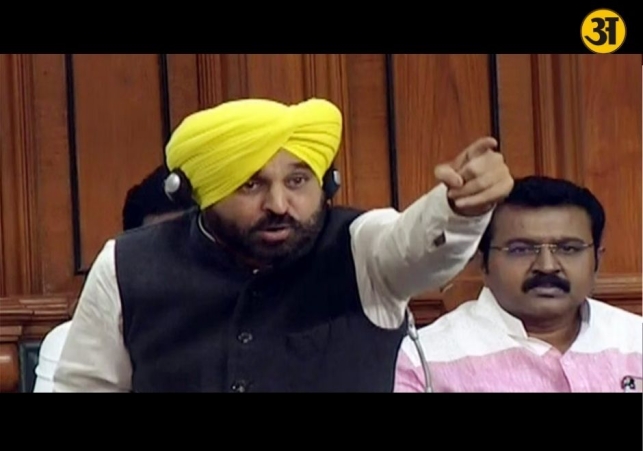
In a major development in Punjab politics, the Akal Takht on Monday declared Punjab Chief Minister Bhagwant Mann a “Guru Dokhi” (anti-Guru) and “Panth Virodhi” (against the Sikh community). The decision came after Sikh religious leaders said an objectionable video linked to Mann hurt Sikh sentiments.
The decision has created a fresh controversy in the state and increased tension between the Punjab government and Sikh religious bodies.
The announcement was made at the Akal Takht, the highest religious authority for Sikhs, located inside the Golden Temple complex in Amritsar.
The religious order was issued by five Sikh high priests led by acting Jathedar Giani Kuldeep Singh Gargaj.
They asked the Sikh community to cut social and religious ties with Bhagwant Mann.
This is one of the strongest actions that can be taken by Sikh religious authorities.
The decision came after a meeting of several Sikh organisations and leaders. The main issue discussed was the Jaagat Jot Sri Guru Granth Sahib Satkar (Amendment) Act, 2026, also known as the anti-sacrilege law.
The law was passed by the Punjab Assembly earlier this year.
Although the government says the law is meant to protect the dignity of Guru Granth Sahib, Sikh religious leaders say some parts of it interfere in Sikh religious matters.
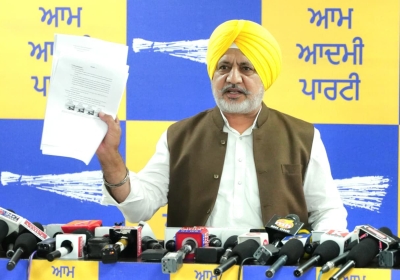
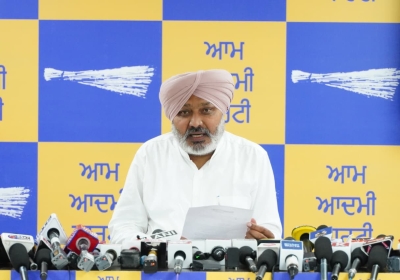
The Akal Takht has now also summoned all Sikh MLAs and cabinet ministers who supported and signed the bill.
They have been asked to appear before the Akal Takht on June 29 and explain their role in passing the law.
This has made the issue even bigger because it now includes many members of the ruling government.
ALSO READ: UK defence secretary quits over military funding dispute with Starmer
Why the Akal Takht is unhappy
The anti-sacrilege law was passed by the Punjab Vidhan Sabha in a special one-day session on April 13.
The bill was passed unanimously.
Punjab Governor Gulab Chand Kataria approved the law on April 17, and it officially came into effect on April 20.
The law provides strict punishment for anyone found guilty of disrespecting Guru Granth Sahib.
This includes life imprisonment and fines up to ₹25 lakh.
The Punjab government says the law was made to stop repeated sacrilege incidents in the state.
But the Akal Takht says the problem is not the punishment.
Its main objection is about certain clauses in the law.
One of the most controversial parts asks the Shiromani Gurdwara Parbandhak Committee (SGPC) to maintain a digital record of all “saroops” (copies) of Guru Granth Sahib.
This means details of every holy scripture would be recorded officially.
The Akal Takht believes this puts Sikh religious matters under government control.
Sikh leaders say this is direct interference in Panthic affairs.
They argue that the management of Guru Granth Sahib should remain completely within Sikh institutions and not under state laws.
On May 8, the Akal Takht officially rejected the law.
Punjab Assembly Speaker Kultar Singh Sandhwan had appeared before the Takht to explain the government’s side.
After hearing him, the Akal Takht gave the Punjab government 15 days to remove the controversial clauses.
Later, on May 11, it sent a detailed letter explaining its objections.
But according to Sikh leaders, the government did not make any changes.
That is why the religious action against Bhagwant Mann has now been taken.
Mann stands firm on the law
Even after the strong religious order, Chief Minister Bhagwant Mann has not changed his stand.
He has clearly said the law will not be withdrawn or weakened.
Mann believes the law is important to protect religious sentiments and stop acts of sacrilege.
He has defended his government’s decision and said it was made in the interest of justice.
The issue has now become both political and religious.
Many political experts believe it could have a major impact in Punjab, where religion and politics often go together.
The Akal Takht’s decision is being seen as a serious challenge for the Aam Aadmi Party government.
The June 29 appearance of Sikh MLAs and ministers will be closely watched.
It could increase pressure on the government.
At the same time, Mann’s strong stand shows that the government does not want to step back.
This may lead to more debate and tension in the coming days.
Many Sikh groups support the Akal Takht’s concerns and believe religious independence must be protected.
Others feel the law is necessary to stop disrespect towards Sikh scriptures.
For now, Punjab is witnessing a major clash between state authority and religious leadership.
The final outcome will depend on whether the government decides to make changes or continues with the law as it is.
The controversy has once again shown how sensitive religious matters remain in Punjab.
With both sides standing firm, the coming weeks may be very important for the state’s political and social atmosphere.
Related News